Doctor to the Kazak Nomads
cctv.com 10-20-2005 16:06
In Xinjiang Uygur Autonomous Region, over one million Kazaks have been living nomadic lives for hundreds of years. Our reporter Guo Liying went to visit some of these Kazaks living deep in the mountains. As she explains, though women and children have next to no medical access there, that doesn't mean they are without medical help.
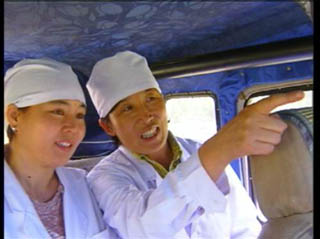
In a remote county in northern Xinjiang, doctor Jiang'er begins her daily work. But today, she has a different job.
Jiang'er and her assistant will travel deep into the mountains where nomadic Kazak women and their children have no access to medical facilities. The bumpy road to the mountains is not her biggest worry.
Director of Fuhai Women& Children Health Center Jiang’er said, "It's an eight hour plus trip into the deep mountains. But we usually takes more time because of the weather, car problems or other accidents."
During the herding season, Kazak women usually go with their men to the pasture--the place where they make their livelihood.
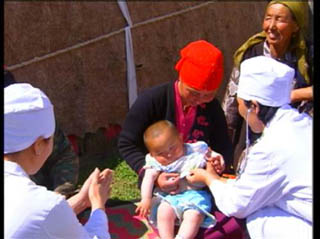
As the mother of a baby who is less than a year old, Kunla has no choice but to bring her little child along with her.
For doctors, babies are always the top priority. If they aren't actually ill, doctor Jiang'er usually leaves some medicine to make sure the babies do not suffer malnutrition.
Kunla said, "It concerns me a little bit. The boy is too young. But we have those doctors coming to see us regularly. That is a great help."
Down the mountains, making sure pregnant Kazak women give birth to their babies safely is another part of doctor Jiang'er's daily work.
Eighty percent of the people in Fuhai county are Kazaks, who usually deliver their babies without any medical help. Preparing themselves to educate the Kazaks is also an indispensable role for the doctors.
Jiang’er also said, "Pregnant Kazak women are liable to have high blood pressure, or strokes due to their lifestyle. It is very important for us to make sure the mother and baby are safe."
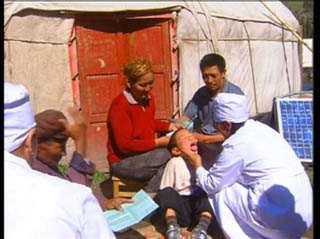
Once in the mountains, doctor Jiang'er usually stays for at least a week, making sure every woman and child gets the necessary medical checks and treatment in a timely manner.
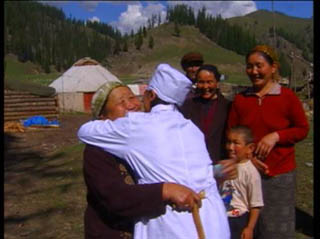
The Kazaks feel a reluctance to say goodbye, but also a gratitude that they are not alone without help in the mountains.
Editor:Liu Fengming Source:CCTV.com